

Old San Juan and the Case for Cities That Choose People
I didn’t go to Old San Juan looking for lessons in architecture or urban planning. I went expecting color, history, and good food. What I didn’t expect was how strongly the city would reinforce something I’ve felt for a long time: we’ve largely forgotten how to design places that help people feel like they belong.
Old San Juan doesn’t try to impress you. It doesn’t scale up, smooth out, or over-explain itself. It simply works, because it was built for people first.
Walking its narrow, cobblestone streets, everything happens at a human pace. The buildings are close enough to create shade and enclosure. The blocks are short. The doors and windows are tall and proportional. Cars exist, but they’re clearly secondary. As a pedestrian, you never feel like you’re in the way, which is a surprisingly rare feeling in most modern cities.
What struck me most is how intentional the architecture feels without being precious. These buildings wear their age openly. Cracks, stains, worn tiles, none of it is hidden. Instead of chasing perfection, Old San Juan embraces continuity. The city values cohesion over novelty, and as a result, it feels calm, confident, and deeply grounded.
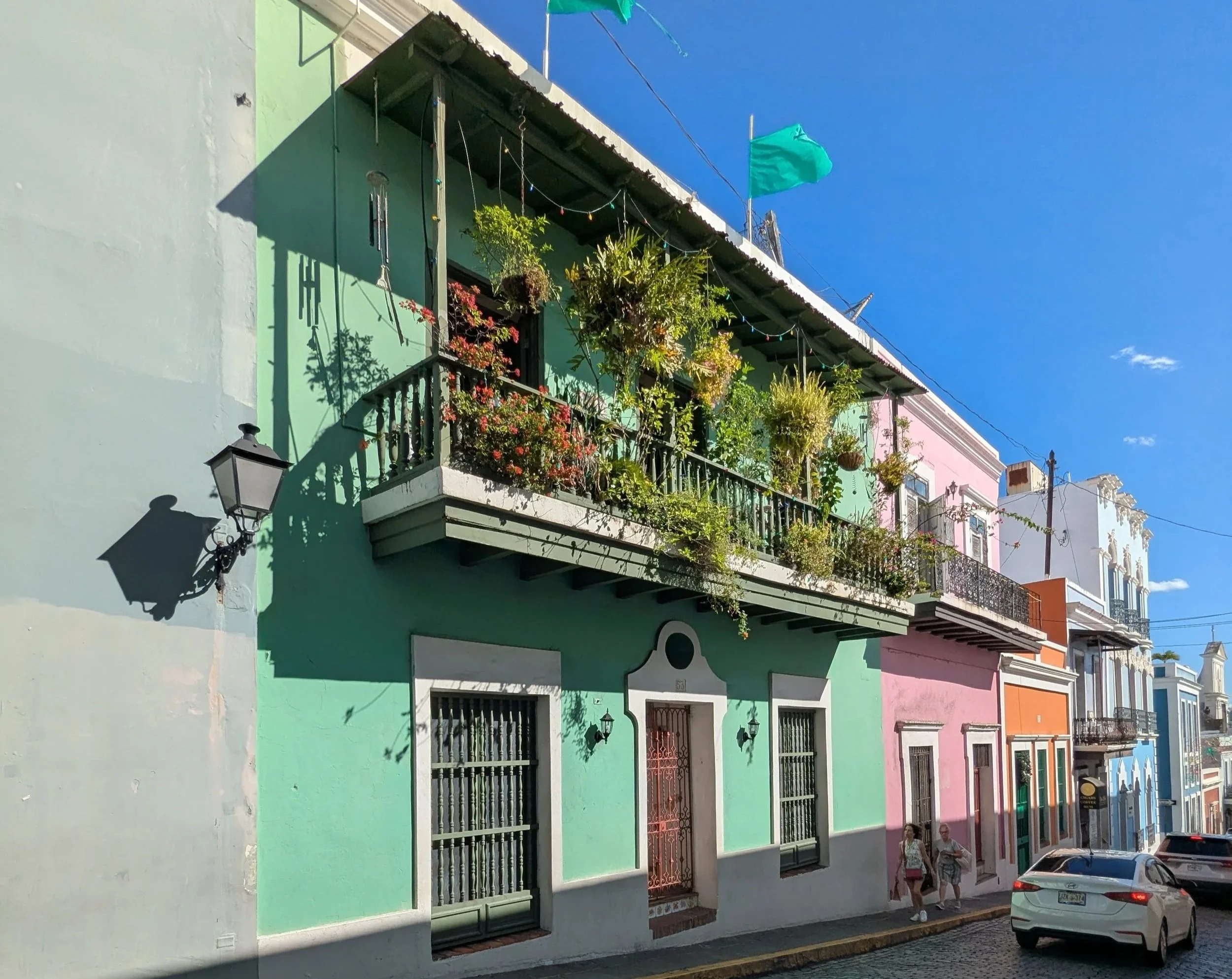
Balconies are everywhere, and they matter. They’re not decorative flourishes; they’re connective tissue. They allow residents to observe, participate, and engage without leaving their homes. They soften the boundary between public and private life, creating a streetscape that feels inhabited rather than staged. You don’t feel like you’re walking through a museum, you feel like you’re walking through someone’s neighborhood.
And that’s the point.
Old San Juan succeeds because it understands something we often ignore: community isn’t created through programming, branding, or density alone. It’s created through proximity, repetition, and scale. When you walk everywhere, you see the same faces. You pass the same doors. You begin to recognize patterns. Belonging grows quietly from familiarity.
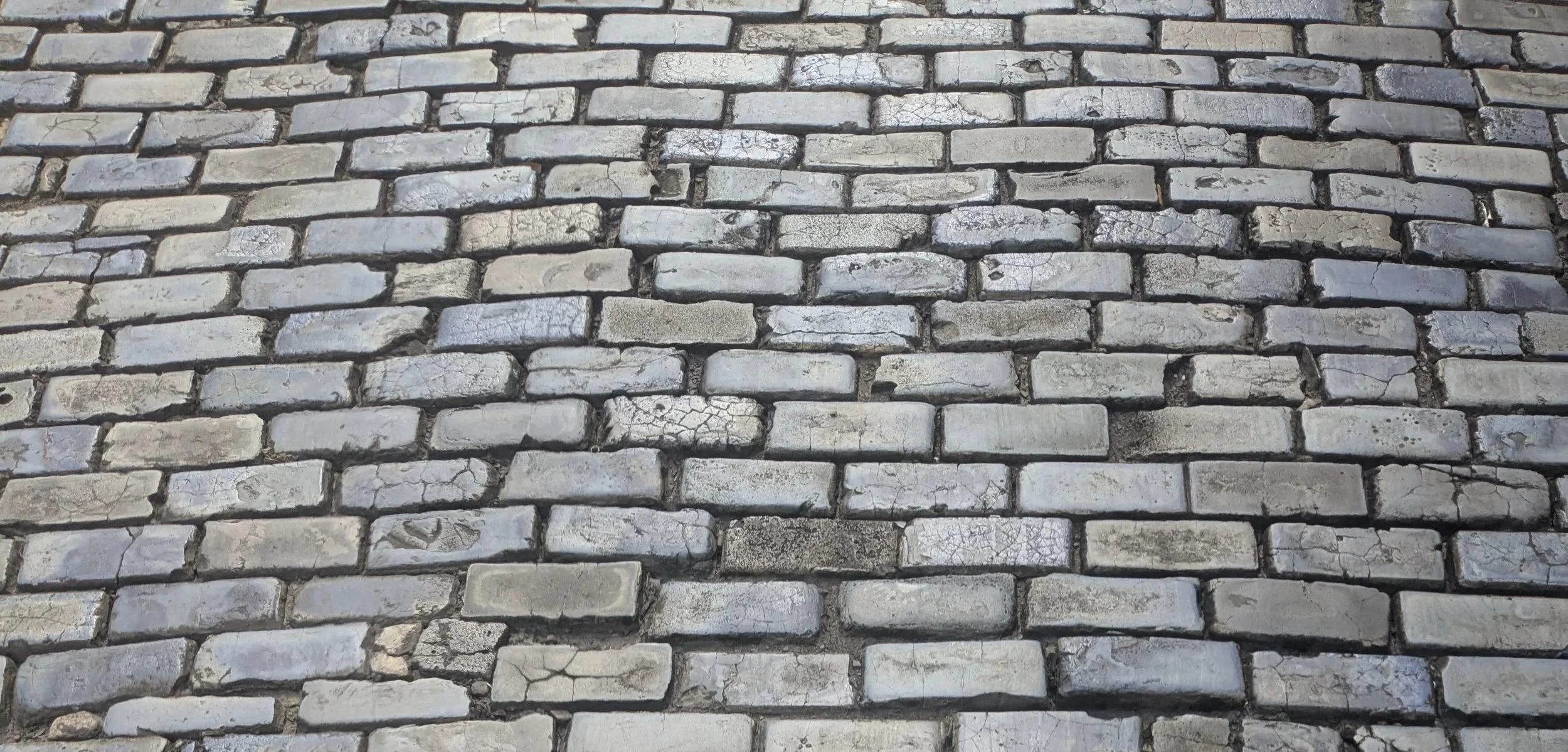
Texture plays a huge role here too. The uneven cobblestones, patterned tiles, thick walls, and deeply set windows all slow you down, physically and mentally. These materials demand presence. They remind you that design doesn’t need to be frictionless to be comfortable. Sometimes a little resistance is what makes a place feel real.
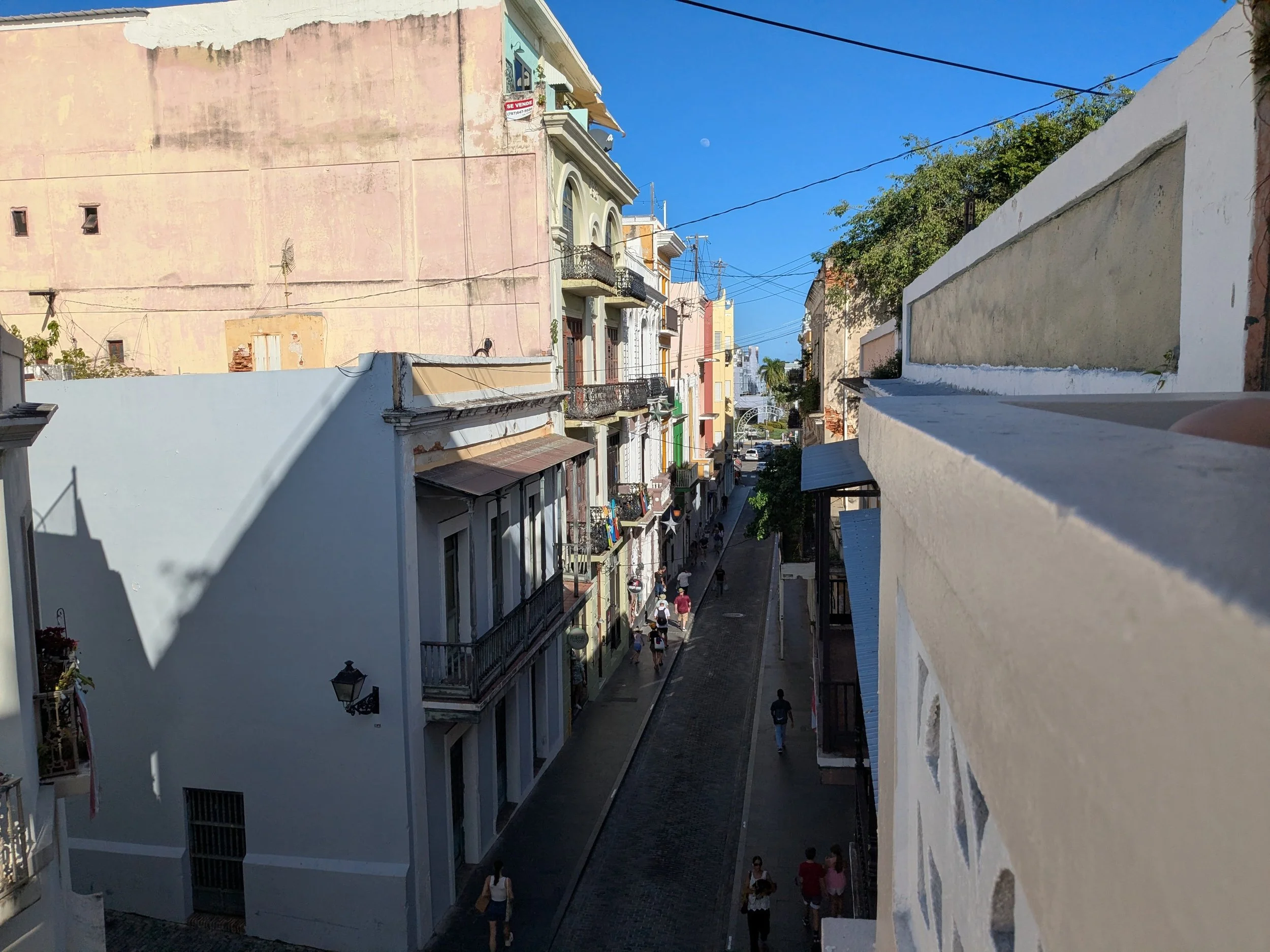
What Old San Juan ultimately reinforces for me is that the missing-middle housing conversation isn’t really about unit counts or density targets, it’s about how those homes relate to the street, to each other, and to daily life. The city is full of buildings that would likely be classified today as “too dense” or “out of scale,” yet they feel anything but. That’s because they’re designed with restraint: shared walls, walkable blocks, active edges, and architecture that prioritizes people over vehicles. If we want to create attainable housing that people are proud to live in, and neighborhoods that feel like communities instead of developments, we need to relearn these fundamentals.
Old San Juan doesn’t ask you to consume it. It asks you to move through it slowly, pay attention, and take part.
And that may be the most opinionated thing architecture can do.
