

The Case for the Sleeping Pod: Rethinking the Modern Bedroom
I believe most bedrooms are larger than they need to be, and that this extra space often works against good sleep rather than supporting it.
I didn’t come to this conclusion through theory or design trends. I came to it by sleeping better than I ever have.
Why Smaller, Darker Spaces Feel Safer to Sleep In
There’s a growing body of research around sleep environments that points to something surprisingly intuitive: humans tend to sleep better in spaces that feel enclosed, dark, and protected.
From an evolutionary standpoint, this makes sense. Enclosed sleeping spaces signal safety. Reduced visual stimuli calm the nervous system. Darkness supports melatonin production and deeper sleep cycles.
It’s why:
People often sleep better in windowless hotel rooms
Children gravitate toward bunk beds, tents, and forts
Many adults crave heavy blankets, alcoves, and cocoon-like spaces
A large, open bedroom, especially one filled with visual noise, can subtly keep the brain on alert.
Turning a Closet Into a Sleeping Pod
We decided to test this idea in our own home.
Our upstairs bedroom was small and awkward, the kind of space that tries to be a bedroom first and fails at everything else. It had a walk-in closet that wasn’t particularly useful and a sleeping area that never quite felt restful.
So we tried something unconventional.
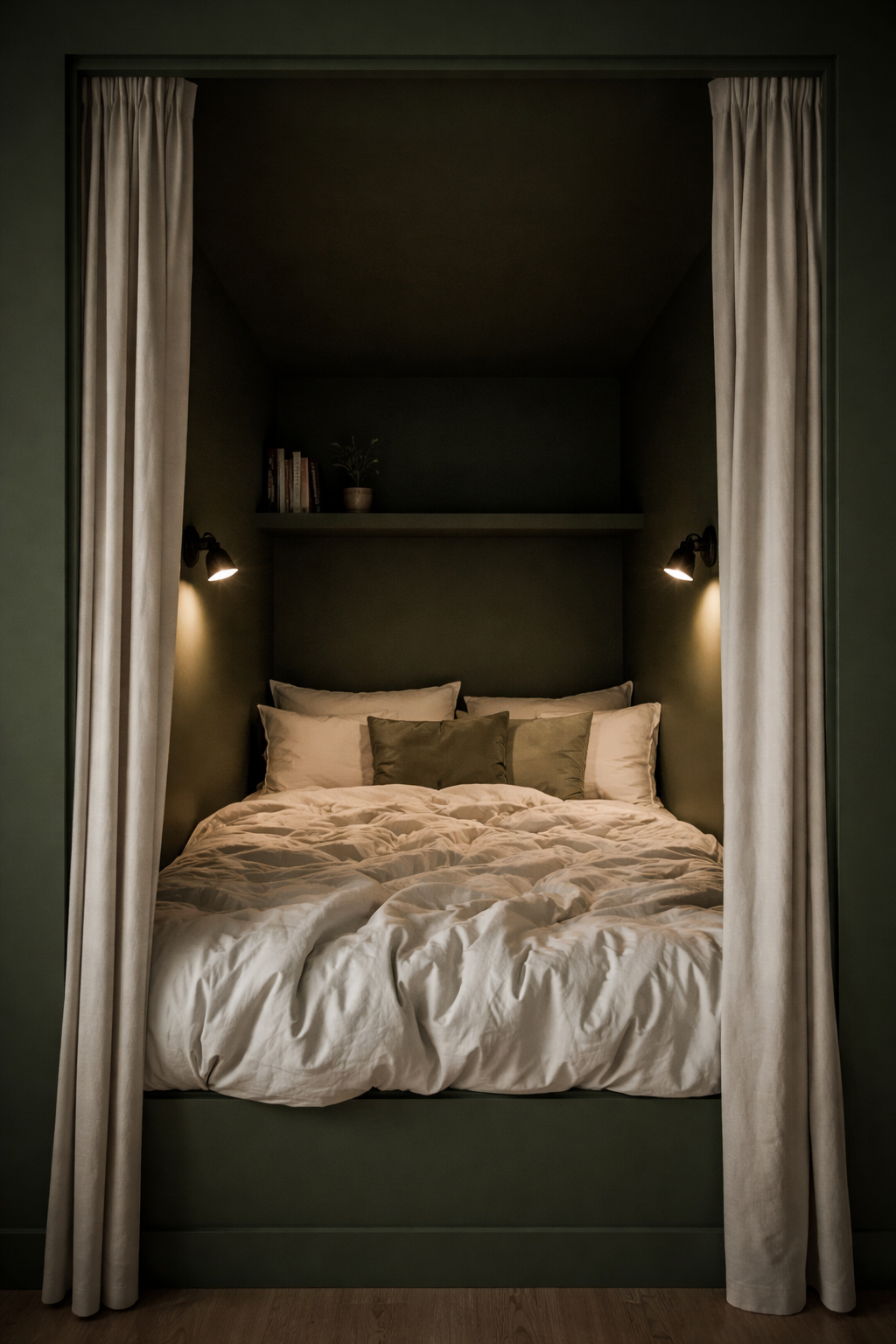
We moved our mattress into the walk-in closet.
We painted the space a dark, moody green. We embraced the enclosure. We stopped thinking of the bed as the room and instead treated it as a sleeping pod.
The result was immediate and surprising.
We’ve never slept better.
When Sleeping Becomes Secondary, the Room Gets Better
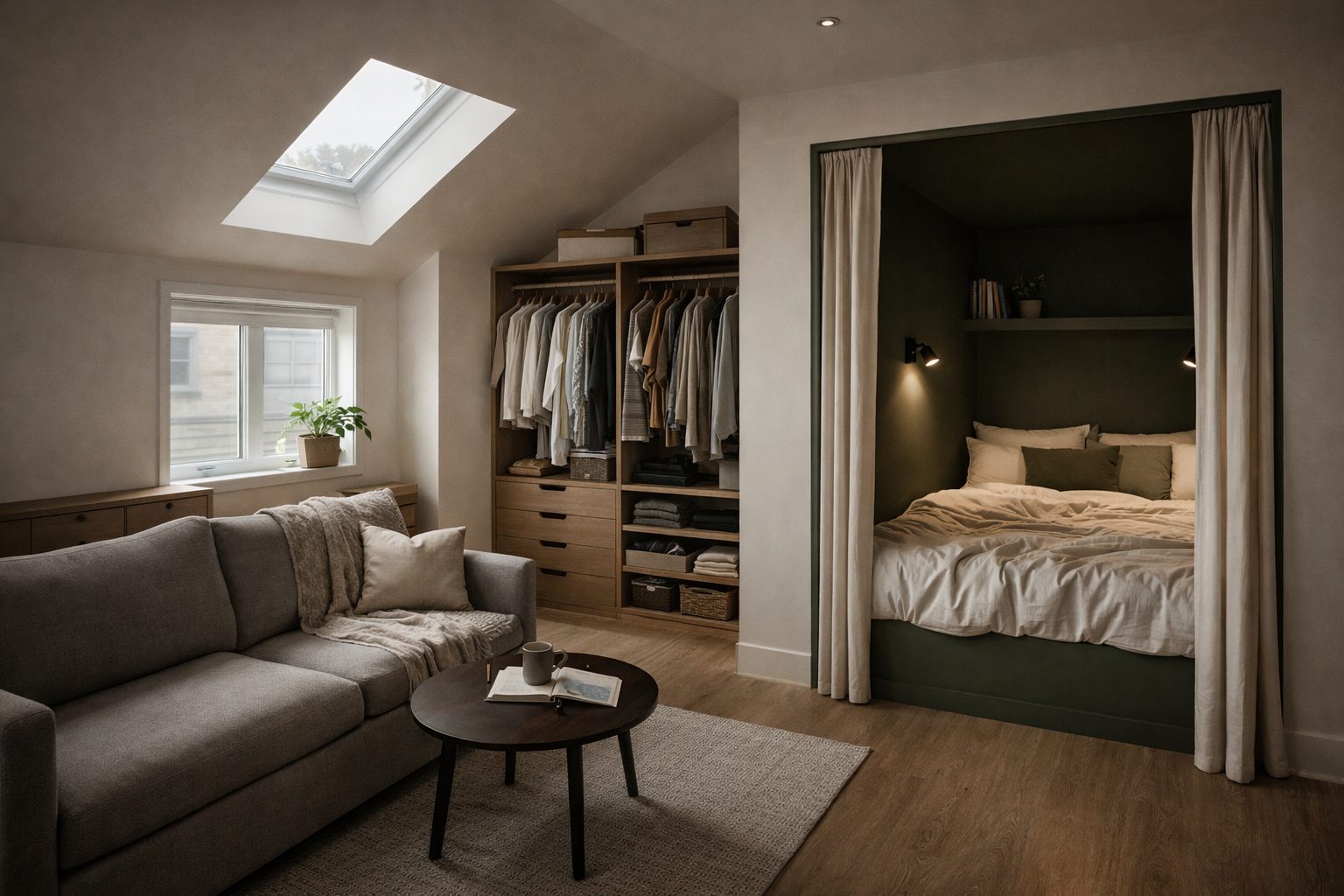
Once the sleeping function moved into its own contained space, the rest of the room opened up, both literally and psychologically.
Our former bedroom became something much more flexible:
A comfortable seating area with a sectional couch
An open closet system that’s easy to access and maintain
Two large dressers with room to move around them
A small office tucked into the dormer, filled with natural light
Instead of being a room that existed solely to hold a bed, it became an oasis, a place to start and end the day gently.
The bed didn’t disappear. It just stopped dominating the space.
A New Model for the Bedroom
What we discovered is that the traditional bedroom layout may be overdue for a rethink.
If sleep benefits from:
Darkness
Enclosure
Reduced visual stimulation
Then perhaps the sleeping area doesn’t need to be the largest or most prominent part of the room.
By separating sleep from everything else, you can:
Reduce the overall bedroom footprint
Improve sleep quality
Gain more usable living space
This approach is especially compelling in smaller homes, urban apartments, ADUs, and future-forward housing where every square foot matters.
Designing for How We Actually Live (and Sleep)
This isn’t about novelty or austerity. It’s about listening, to our bodies, our routines, and how spaces make us feel.
By treating the bed as a function rather than a centerpiece, we allowed the room to support more of our daily life without sacrificing rest. In fact, rest improved.
For us, the sleeping pod wasn’t a compromise. It was an upgrade.
And it’s a reminder that sometimes the most powerful design move is not adding space, but reassigning it.
